
SAFE CHEWS FOR PUPPIES FROM 8 WEEKS OLD
- Emily

- Jan 19
- 3 min read
Updated: Jul 10
Chewing is often talked about as essential for puppies, but knowing what is actually safe, and when, can feel confusing. With so many chews available, it’s not always obvious which ones will help your puppy and which ones might cause problems.
Chewing is a natural and important behaviour for puppies. It helps them explore the world, cope with teething, and calm themselves when they feel overstimulated or tired.
When chewing is supported well, it can make everyday life with your puppy feel much easier.

Used thoughtfully, chewing can play a big role in reducing puppy biting, teething discomfort, overstimulation and difficulty settling or resting.
In this guide, you’ll learn why chewing matters for puppy development, how it supports calm behaviour, which chews are suitable from 8 weeks onwards, and how to choose and use chews safely so they genuinely help your puppy rather than create new issues.
JUMP TO SECTION:
WHY CHEWING IS SO IMPORTANT FOR PUPPIES
Chewing isn’t a bad habit or something to tolerate until it stops. It plays an important role in your puppy’s emotional and physical development.
Chewing can help your puppy:
release stress and tension
cope with frustration or overwhelm
soothe teething gums
settle their nervous system
reduce boredom and excess energy
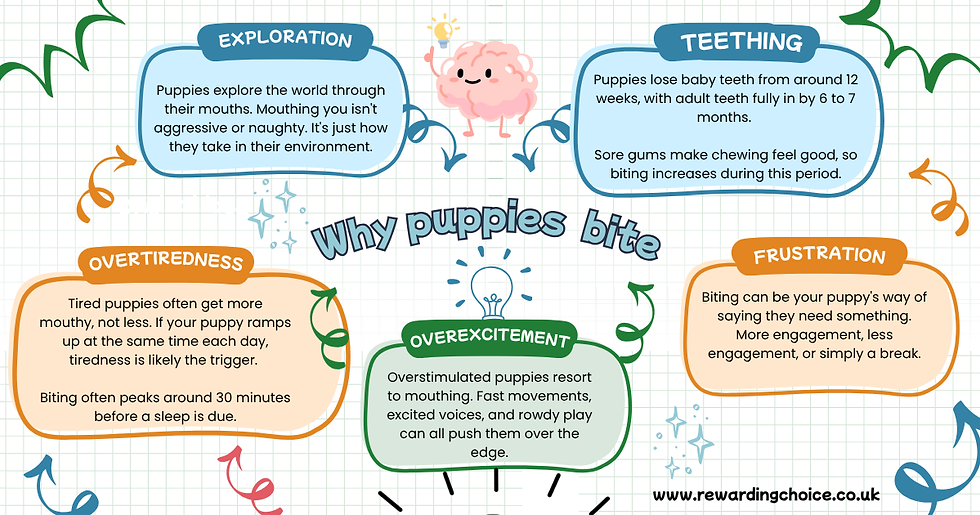
Many puppies bite more when they’re overtired, overstimulated, or unsure how to calm themselves. Chewing gives them a safe, appropriate outlet at exactly those moments.
This is why chewing often features in puppy biting support plans. It’s not about distracting your puppy, but about helping them regulate.
CHEWING AND PUPPY BITING

When puppies are given appropriate opportunities to chew, they often:
mouth people less
settle more quickly
find it easier to switch off
cope better with busy environments
Chewing works best when it’s offered before biting escalates, such as:
late afternoon or early evening
after busy play
following visitors or outings
during teething phases
Used this way, chewing becomes a support tool rather than a last resort.
SAFE CHEWS FOR PUPPIES BY AGE
Not all chews are suitable for all puppies. Age, size, and chewing style all matter.
Below is a general guide. Always choose chews that are larger rather than smaller, and suited to your individual puppy.
PUPPIES FROM AROUND 8 WEEKS:
These options are usually softer and more suitable for young mouths:
JR Pet Products meat sticks
JR Pet Products meat coins
Olive wood chews
Coffee wood chews
Root chews
These can be helpful during early teething and for gentle chewing sessions.
PUPPIES FROM AROUND 12 WEEKS:
As your puppy grows, they may cope well with a wider range of chews:
Ostrich bone
Braided lamb
Beef or lamb tails
Rabbit ears
Pizzles
Lamb, pork, or beef spaghetti
Moon bones (no actual bone)
Camel skin or camel braids
Himalayan yak bars
Cow ears
Split antlers
Buffalo hooves
Braided beef
Beef trachea
Pig ears
Always supervise closely and remove chews if they begin to splinter or become small enough to swallow.
CHEWS THAT ARE NOT SUITABLE FOR PUPPIES
Some chews are commonly sold but are not safe for puppies

.
Avoid:
rawhide
cooked bones
These can splinter, cause blockages, or lead to serious digestive issues.
CHEWING SAFETY GUIDELINES
Chewing should always be calm and safe.
Keep these guidelines in mind:
Never leave your puppy unattended with a chew
Always provide access to fresh water
Choose chews appropriate for your puppy’s age and size
Oversized chews are safer than undersized ones
Take chews away once they become small or fragile
If your puppy becomes frantic, possessive, or overly aroused around chews, pause and reassess. Chewing should support calm, not increase intensity.
WHEN CHEWING ISN'T ENOUGH
Chewing is a powerful tool, but it isn’t a solution on its own.
If your puppy is still biting heavily, struggling to settle, or becoming overstimulated regularly, it’s often a sign that:
they need more sleep
their routine needs adjusting
they’re finding something in their environment overwhelming
Chewing works best as part of a bigger picture of rest, routine, and emotional support.
A GENTLE REMINDER
Every puppy is different.
What helps one puppy settle may not work for another, and that’s okay. Chewing is just one way to support your puppy as they learn how to cope with a busy world.
If you’re unsure which chews are right for your puppy, or how to use chewing to support biting and settling, personalised guidance can make things much clearer.
What's your puppy's favourite chew? Tell me in the comments.
Comments